Since 1899

Memoria · persone · cultura

Noi Del Milan

«Domani sogneremo altri traguardi, inventeremo altre sfide, cercheremo altre vittorie. Che valgano a realizzare ciò che di buono, di forte, di vero c'è in noi, in tutti noi che abbiamo avuto questa avventura di intrecciare la nostra vita a un sogno che si chiama Milan».

Silvio Berlusconi

“Our colours will be red like fire and black like the fear we will invoke in our opponents.”

Herbert Kilpin
AC Milan crest framed by a gold laurel and star on white fabric.
White-and-gold edition

Oggi · Today

AC Milan Today

Headlines · match centre · table · 55 moments →

Latest news

Journal edition

Newest first · headlines link to the original publisher

Latest match and upcoming fixtures Open match centre

Loading official match state…

Calendar · Calendario

Upcoming

Full schedule ↗
Serie A table and other live scores Open

Classifica

Serie A table

Official table ↗

PosClubPWDLGDPts

Loading the Commentary Journal…

The journal

Memory, voices and a continuing reading of Milan.

Noi Del Milan is a journal of personal memory, voices from inside the club and a continuing reading of the era that changed modern Milan. It begins in Malta, travels through Via Turati and Milanello, and returns to San Siro—not as nostalgia alone, but as a story of people, culture and ideas.

“I wasn’t just watching football; I was falling in love with a philosophy of excellence.”

Jesmond Saliba · personal reflection

Preface

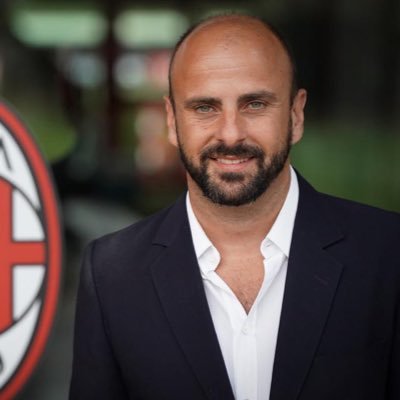
Portrait of Nicola Pozzi.

“This account is so valuable.

Because it tells the same philosophy I breathed every day at Milan: the greatest victory is never just on the pitch, but in people who know how to unite vision and heart, professionalism and passion, leadership and humanity.

Jes tells all this.

And he does so as only someone who has truly lived the value of relationships can: with the awareness that every project, every team, every success always starts there—from people.”

Nicola Pozzi
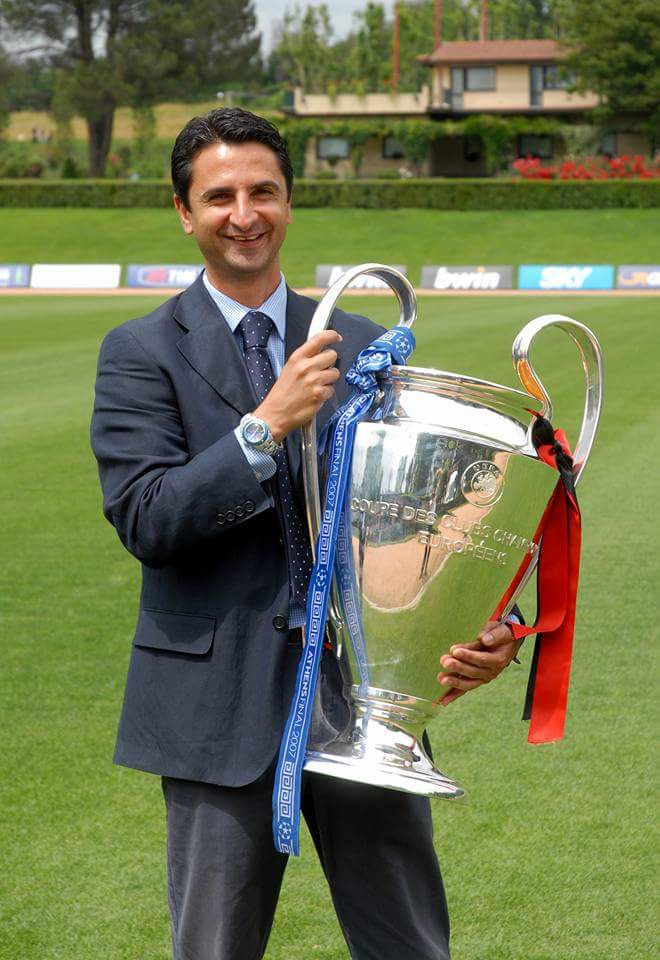
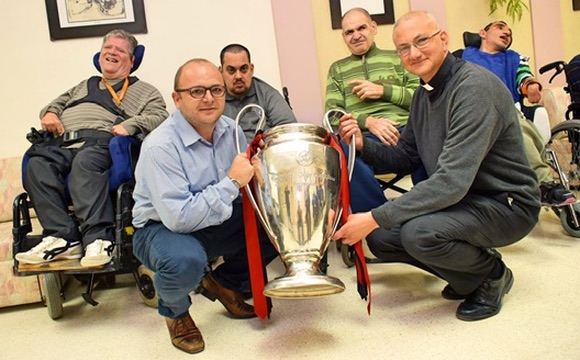
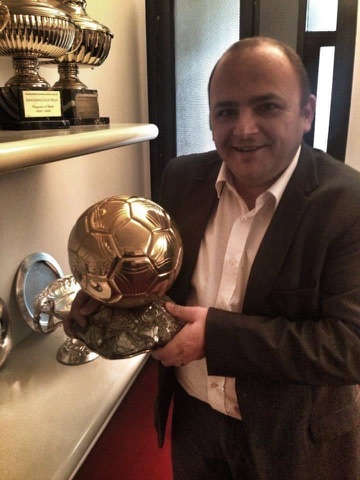
Giuseppe Sapienza holding the European Cup at Milanello.

“A few days after the Maltese training camp, Jes came to study Milan at Milanello. In his first minutes inside the Sports Centre, I sensed in him the same feeling a child has entering Disneyland. Gradually, day by day, he became more familiar, asked questions, interviewed the Milan world around him, interacting more and more with all of us. At Milanello, as in the historic headquarters on Via Turati, in central Milan, and at San Siro stadium.

When you are curious, you are already on the right path. That is why Jes found the path to success with us immediately.”

Giuseppe Sapienza

Testimonianza · Nicola Pozzi

Beyond the Pitch

Jesmond, the people, values and invisible spirit of Milan.

My connection with Jes began in my early years at Milan. It’s a relationship that has grown over time, made up of meetings, messages, and shared moments, and it still lasts today, almost twenty years later. I was little more than a kid, and Jes often came to Milan, stopping by the office on Via Turati to work on his projects with us. Over the years, through various occasions, I got to know him well—not just professionally, but above all, as a person.

Jesmond Saliba, “Jes” to those who truly know him, is one of those rare people who can combine vision and humanity, mind and heart. Even then, his natural ability to create connections, put people at ease, and build authentic relationships without ever forcing them was striking. Over time, our relationship solidified, fueled by mutual respect, trust, and shared values, becoming a sincere friendship despite the distance.

There are two moments that best describe this relationship.

The first: June 2012. I was in the Mediterranean with the Milan press delegation during a work cruise. The stop in Malta was the perfect opportunity to visit Jes’s homeland.

I remember that day vividly: lunch by the sea at the port with Jes and Pietro Mazzara, journalist for MilanNews, the relaxed atmosphere, time seeming to slow down. Then the visit to the old city and the upper part, with a spectacular view. In those moments, I saw Jes in his natural environment—his knowledge, his way of relating to locals, and with us, his ability to welcome us, take care of us, and make us feel instantly at home. Not because of his role, but because of his nature.

Then came 2016.

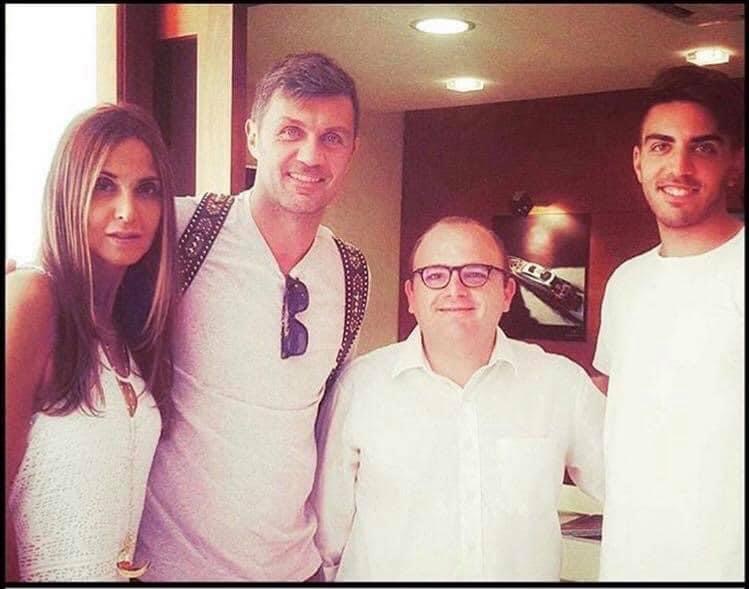
A friend close to the Maldini family asked me for advice: Christian, Paolo’s eldest son, was about to start his football adventure with the Maltese team Hamrun Spartans and needed someone to help him. The answer was immediate, almost instinctive: Jes.

Jes was present from the very first days, with his usual helpfulness. He didn’t just facilitate logistical or professional integration; he especially cared for the peace of mind of a young man starting a new journey far from home. From that experience, something was born that went beyond football: relationships, trust, mutual respect.

Even today, that subtle thread connecting Jes, the Maldini family, and Milan continues to exist. It shows that there are bonds capable of overcoming time and distance.

Perhaps this is Milan’s true strength: human relationships.

Unity, trust, attention to detail, the constant pursuit of perfection. That ongoing drive to improve, to be the best version of yourself every day, to honour a shirt and a history that has given you everything and to which you want to give back all you can.

When I joined Milan in 2007, I had a fire inside me that I still can’t extinguish.

My first match was in Athens: the Champions League final won 2–1 against Liverpool with Pippo Inzaghi’s double.

It seemed like a dream, but living the daily life of Via Turati, Vismara—the youth centre—and then Milanello, I understood that victory was no accident. It was the result of a culture. Behind the great champions, behind the lights, there was an invisible world made of discipline, trust, respect, friendship. Every person, from the player to the kit man, knew they were part of something bigger.

Jes perfectly embodies that spirit.

Vision, empathy, dedication, but above all respect for people. He is living proof that the values that make a team great can also guide the world of work, leadership, and life.

Today, years later, I feel the same emotions as on the first day.

The same fire, the same passion.

Because what really remains, in a fast-moving world, are people, the trust you build, the care you put into relationships, and that constant quest to improve—for yourself, for others, for something greater.

That’s why this account has such value.

Because it records the same philosophy I breathed every day at Milan: the greatest victory is never just on the pitch, but in people who know how to unite vision and heart, professionalism and passion, leadership and humanity.

Jes tells all this.

And he does so as only someone who has truly lived the value of relationships can: with the awareness that every project, every team, every success always starts there—from people.

Testimonianza · Giuseppe Sapienza

United by Vision

People, passion and the heart of Milan.

On a winter day in 2006, coach Carlo Ancelotti approached me and asked, “Are you happy?” Not knowing what he was referring to, I said yes, gesturing around Milanello.

Ancelotti: “You don’t understand. Are you happy to go home?”

Sapienza: “Home? Why?”

Ancelotti: “I see you don’t know… we’re going to Malta for a week, to the warmth.”

Sapienza: “But Malta isn’t exactly my home… I’m from the biggest island, Sicily.”

Soon after, I met Jesmond Saliba, Jes. Friend, professional, exemplary man and father. Passionate about Italian football, in love with Milan. A few days after the Maltese training camp, Jes came to study Milan at Milanello. In his first minutes inside the Sports Centre, I sensed in him the same feeling a child has entering Disneyland. Gradually, day by day, he became more familiar, asked questions, interviewed the Milan world around him, interacting more and more with all of us. At Milanello, as in the historic headquarters on Via Turati, in central Milan, and at San Siro stadium.

When you’re curious, you’re already on the right path. That’s why Jes found success with us immediately. A few days later, Ronaldo the Phenomenon arrived at Milan from Real Madrid. Adriano Galliani, enthusiastic, told me I would have to take care of him. Jes was very happy about it. Our path to success, which seemed clear, became certain. That Milan with Paolo Maldini, Kakà, Andrea Pirlo, Clarence Seedorf, Gennaro Gattuso, and many other champions will be remembered as one of the strongest teams in the world. For three Champions League finals in five years, two of which were won, and for the fabulous international treble in 2007: Champions League, UEFA Super Cup, and Club World Cup.

With President Silvio Berlusconi at the helm, that extraordinary club, anticipating changes, transformed into a true entertainment company, developing its TV channel also on the web, inaugurating its own media house with a connected social media apparatus, and being the first to find the magical intersection between sport, entertainment, and fashion, right in one of the world capitals of fashion, economy, and entertainment: Milan.

It was the beginning of a new way of communicating and the end of an era that gave way to technology. The same technology that Milan was already using with at least a five-year advantage over all other top European clubs, especially in communication, marketing, and the medical area with the revolutionary Milan Lab.

These journal entries preserve what the era meant, examine how it worked and ask why it still matters.

A life in Rossonero.

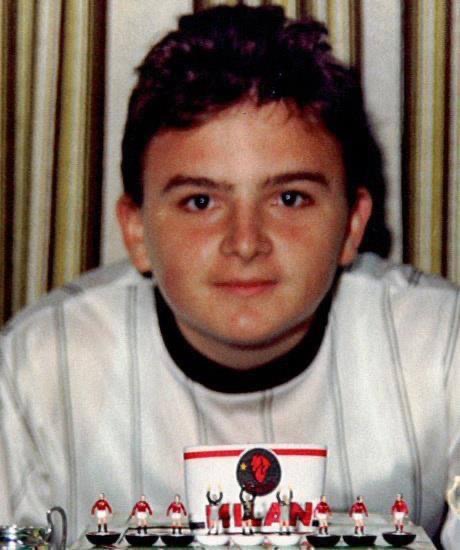
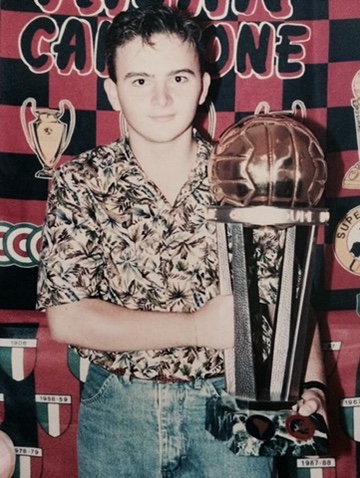
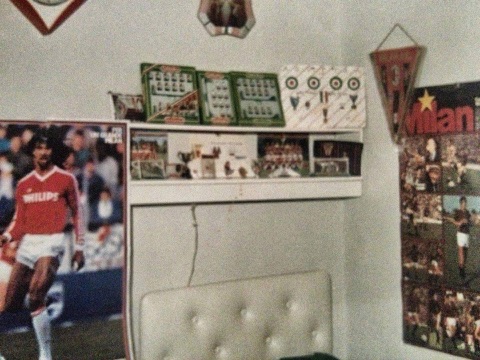
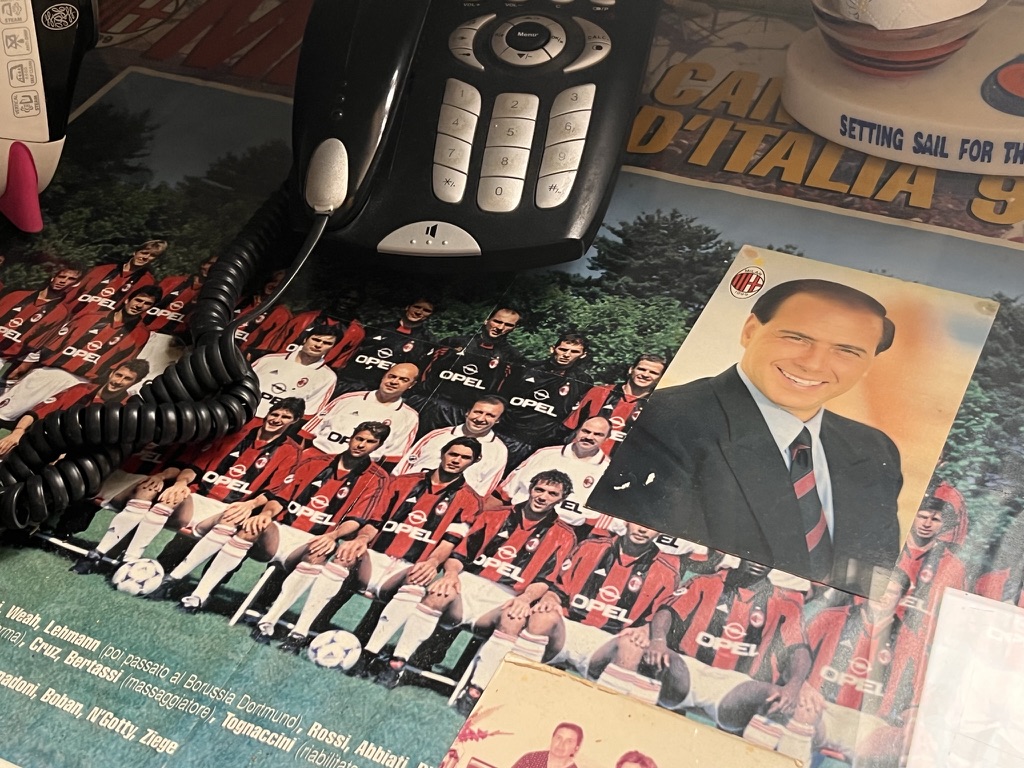
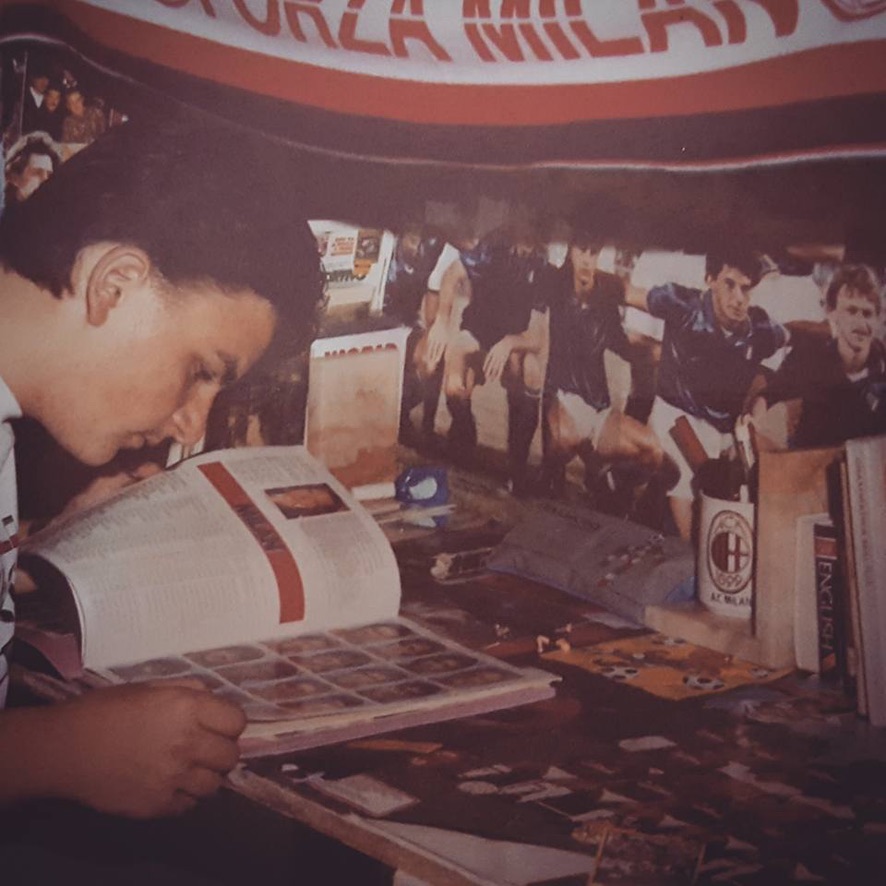
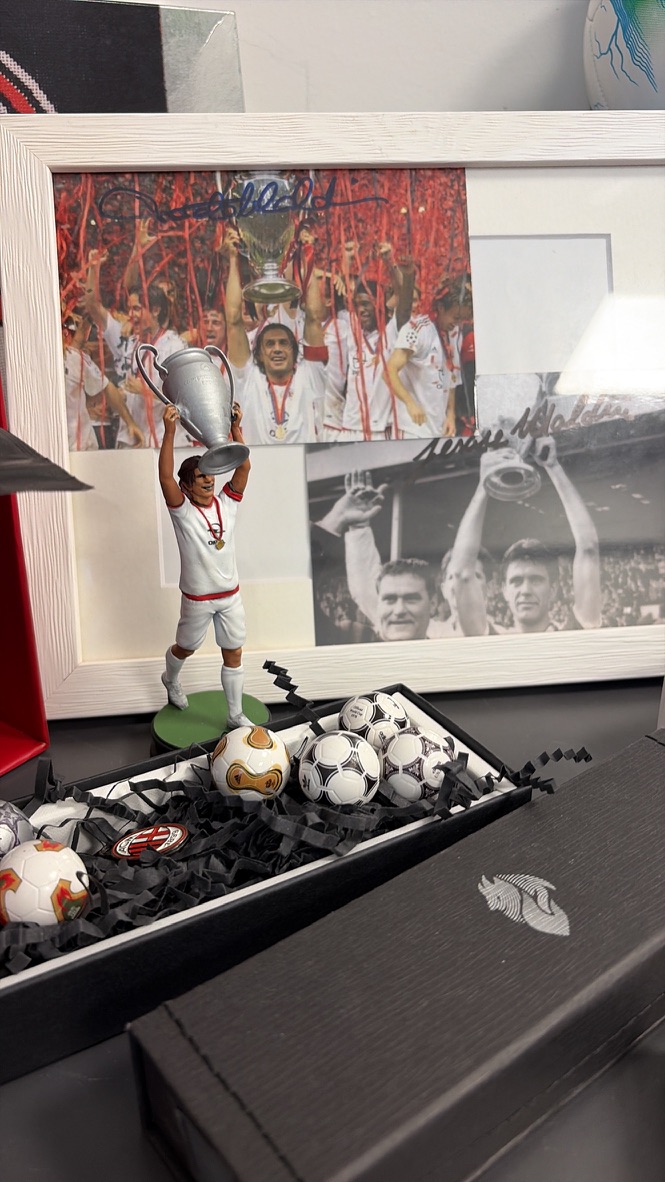
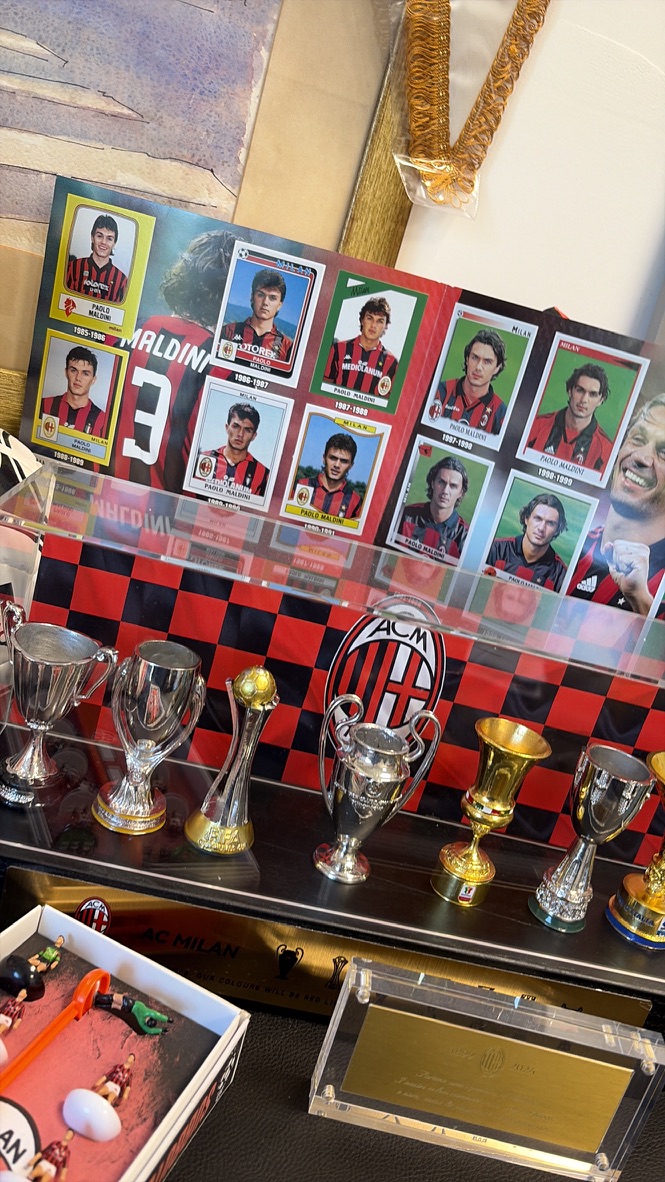
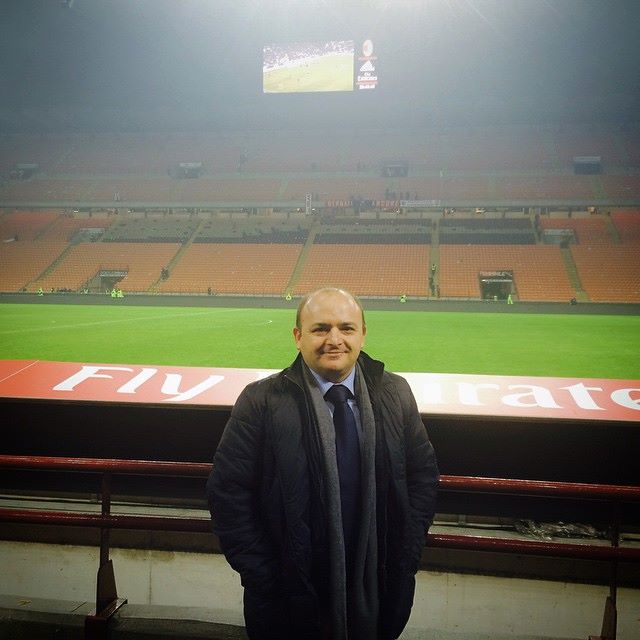
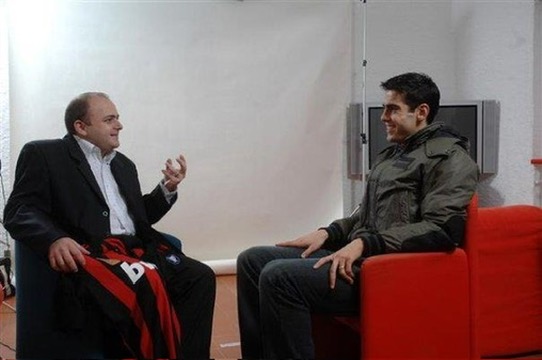
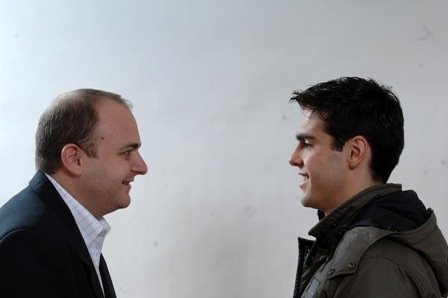
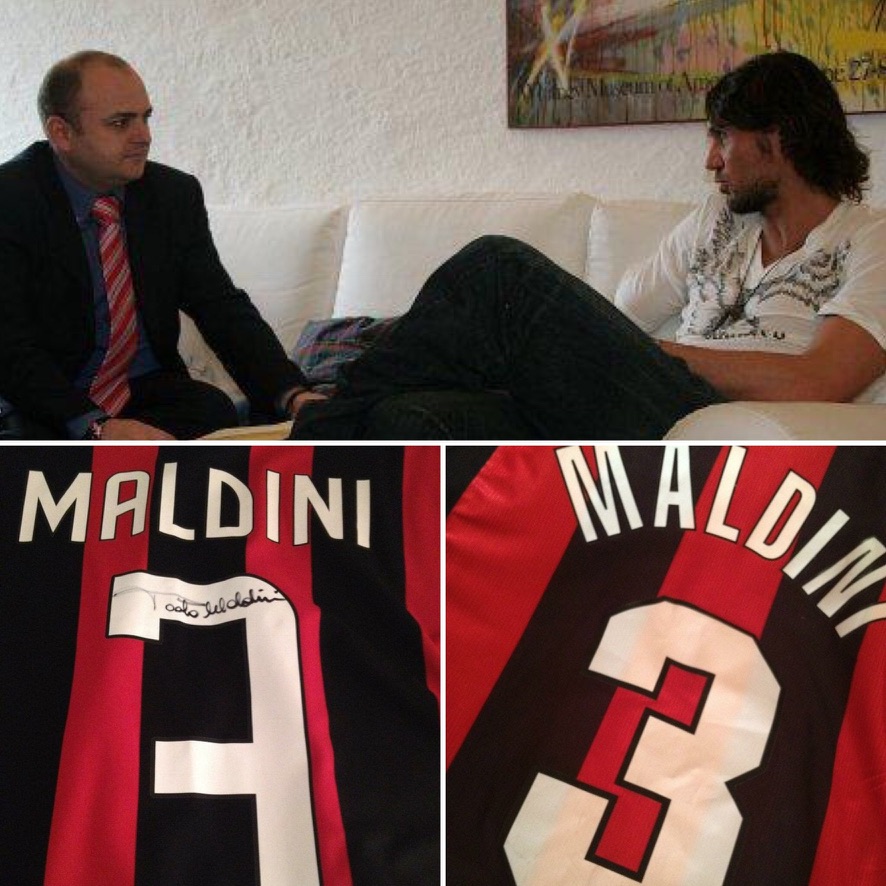
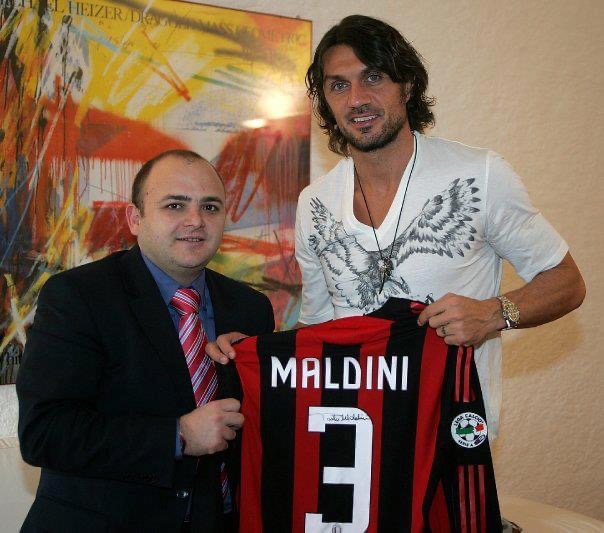
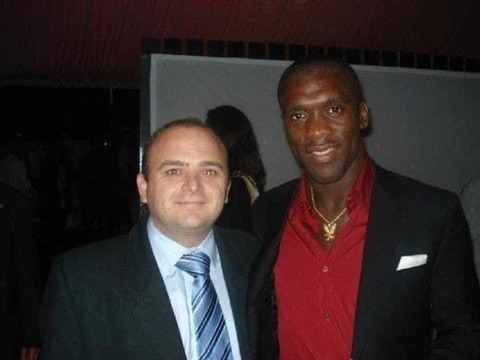
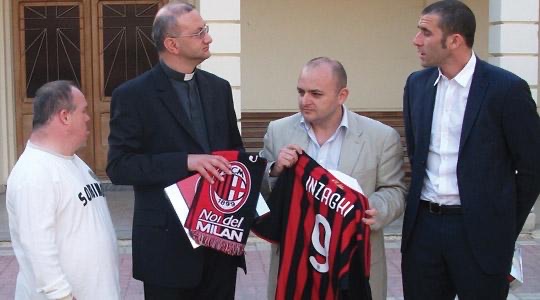
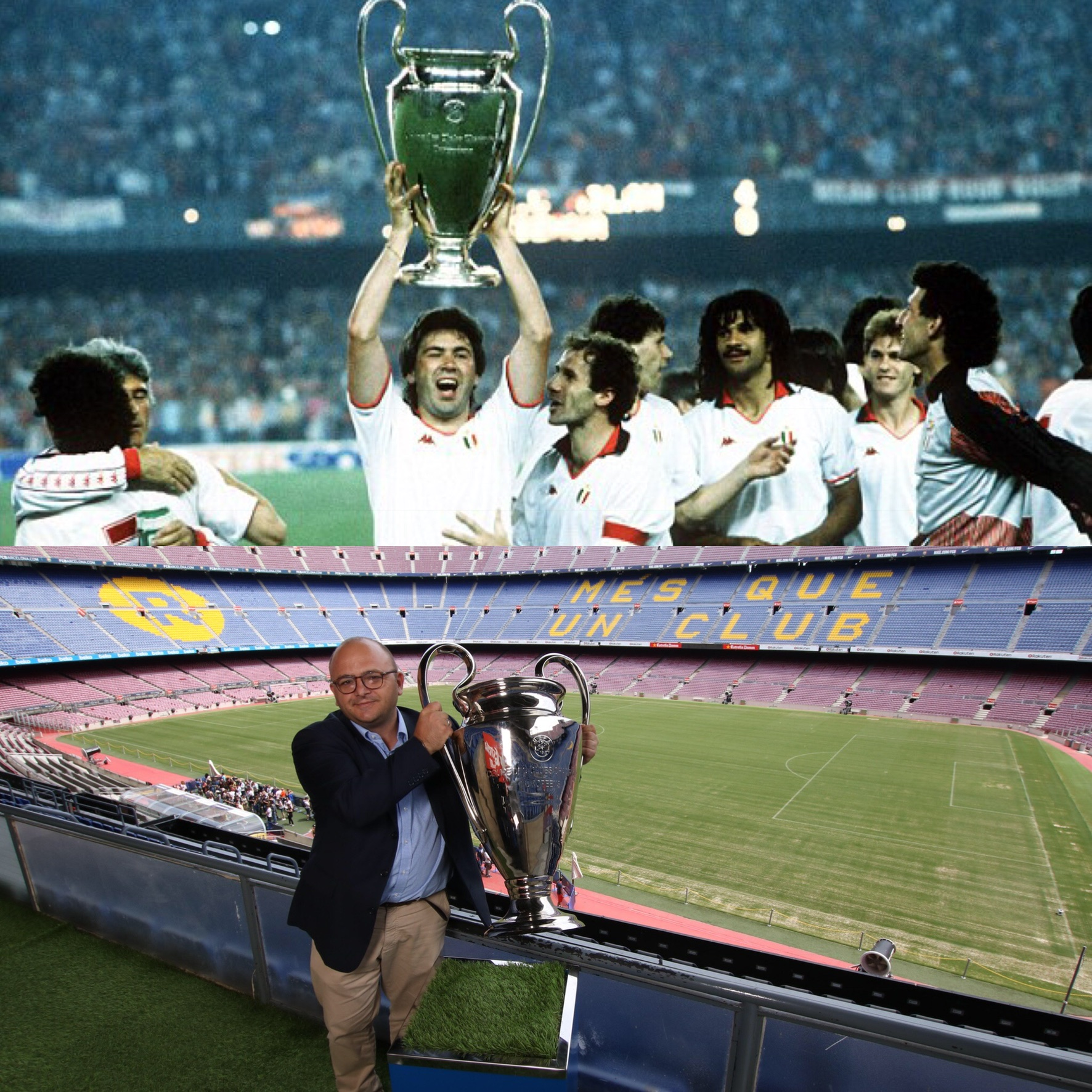
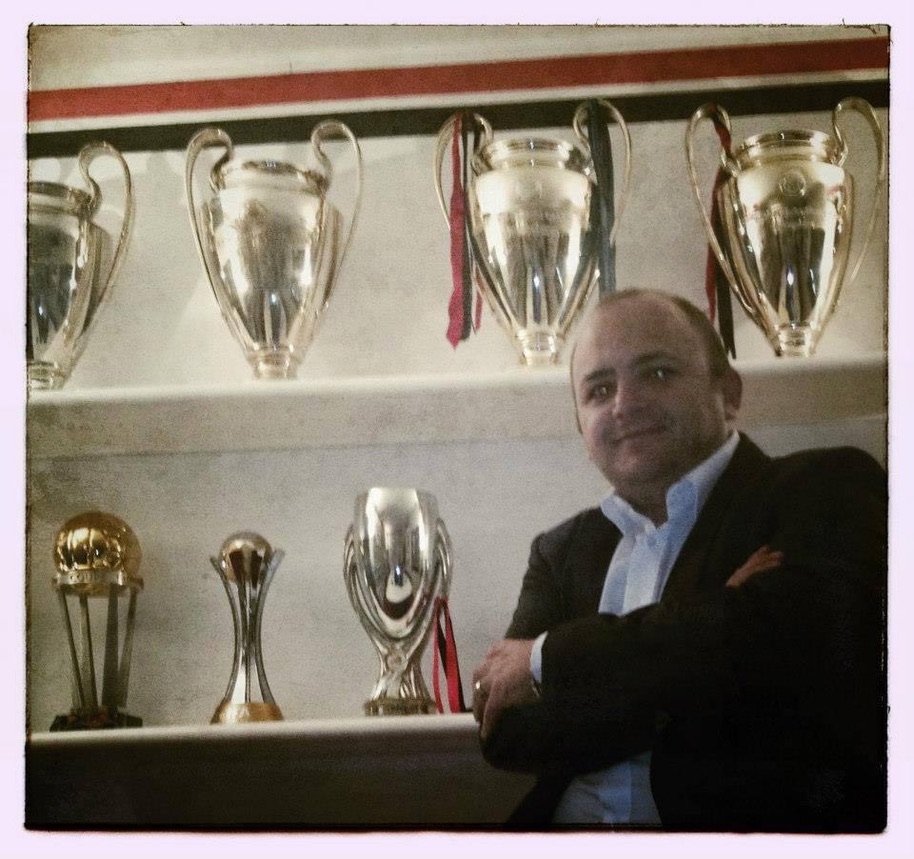
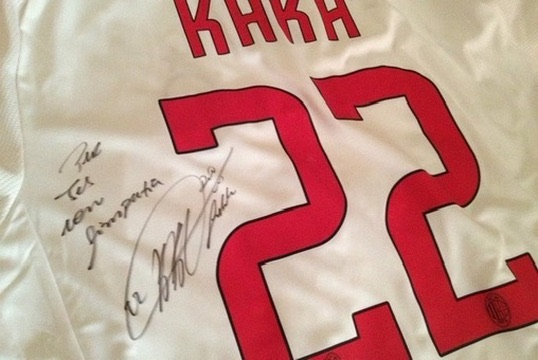
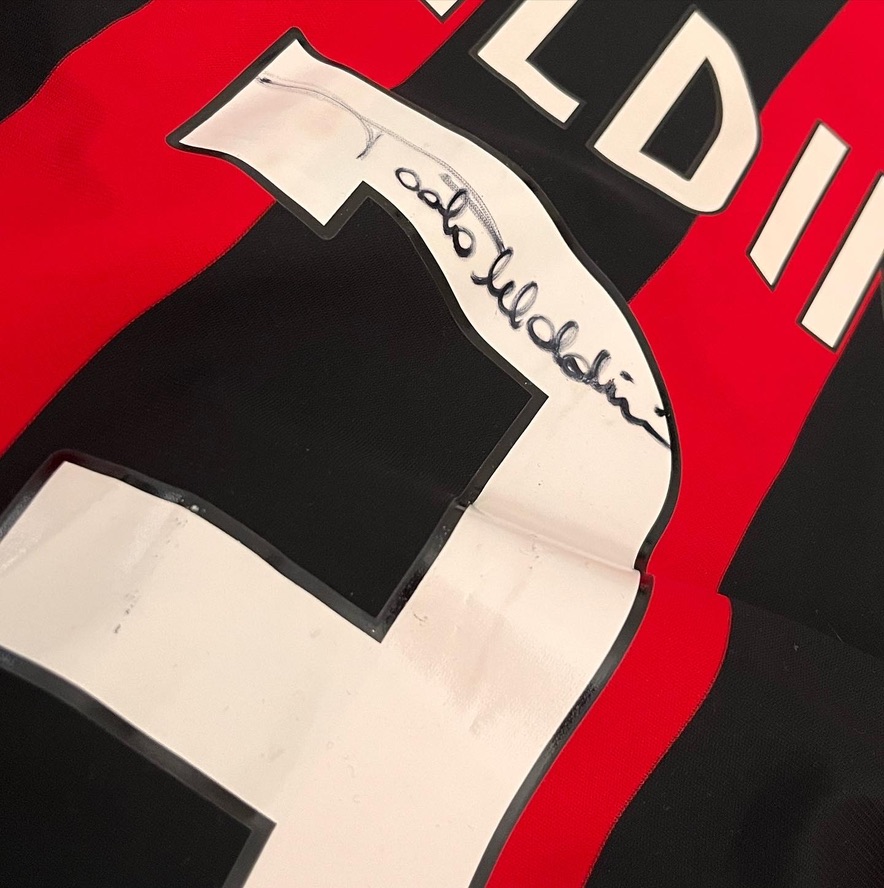
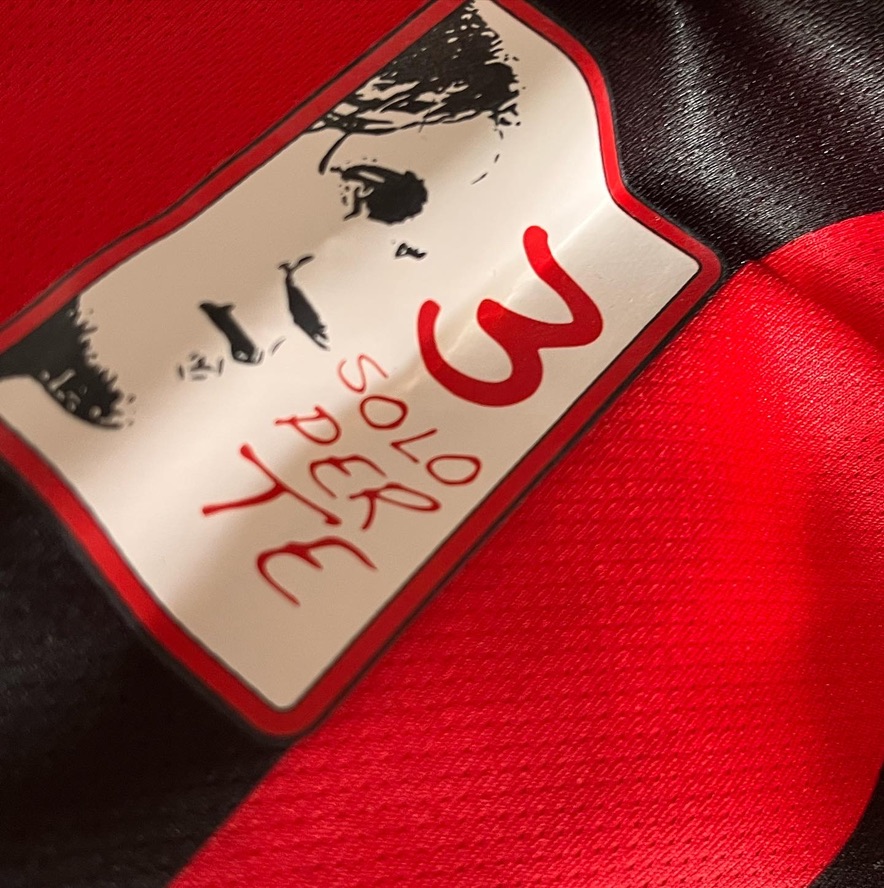
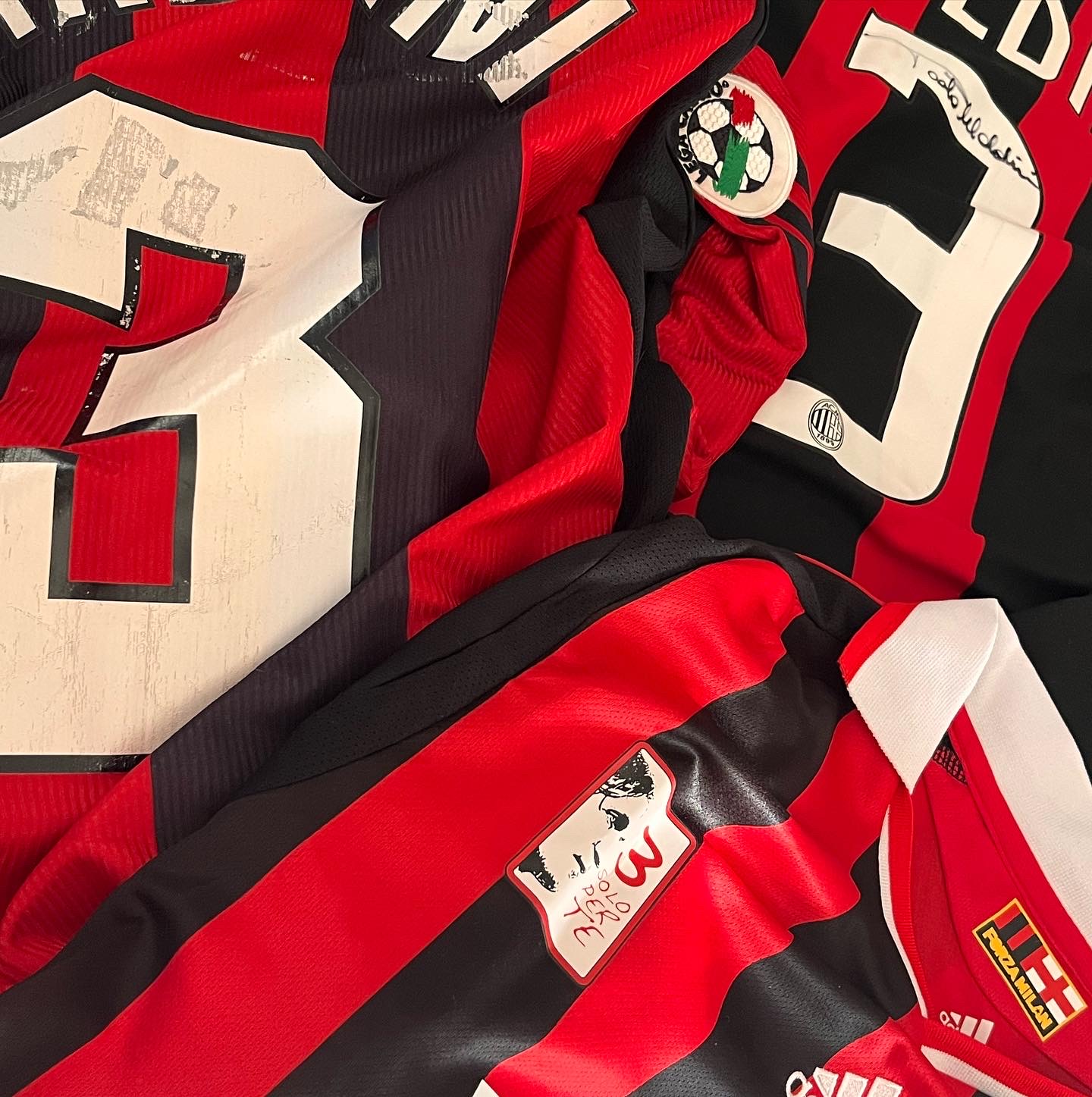
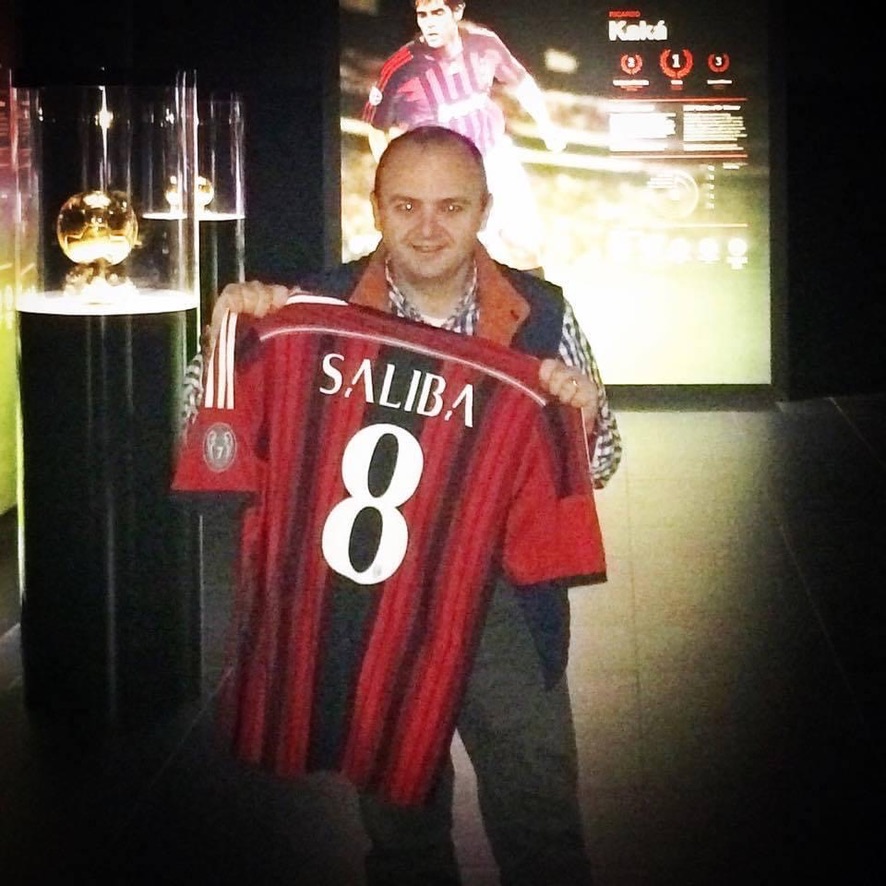
These photographs are the journal’s first-person record: a childhood room, a tabletop team, encounters and conversations, shirts kept close, and visits to the places where Milan’s story is held.

Together they trace a passage from admiration to proximity—from following Milan at a distance to carrying the memory forward personally.

Four ways of seeing

How Milan changed the way I see.

I did not experience that era only as football. From Malta to Via Turati, Milanello and San Siro, I learned to read it through four connected ideas. Together they explain how admiration became a way of understanding people, culture and change.

01

Vision

At eleven, I turned a bedroom in Malta into San Siro and a living room into Via Turati. Later, walking through the real headquarters, I understood that imagination mattered because Milan had dared to state an ambition and organise around it. Vision became more than a promise: it was the courage to name a destination and make each decision point towards it.

02

System

Sacchi first showed me that the team could be the star. Milanello made that idea human. I watched veterans guide younger players, staff share the same table and knowledge move without an organigram ordering it. I came to see a system not as a diagram, but as shared movement, trust and daily habits that allow individual talent to serve something larger.

03

Standards

The era taught me that excellence had to survive the afternoon after a victory. Capello’s discipline, Galliani’s attention to detail and Maldini’s example made standards visible in preparation, conduct and continuity. Winning mattered, but so did how people carried the shirt, treated one another and responded when expectations became heavy. Standards were culture made observable.

04

Adaptation

Under Ancelotti, I saw that flexibility did not require the loss of identity. Shapes, roles and generations could change while the purpose remained recognisably Milan. That balance changed my understanding of leadership: adapt the method, listen to the people in front of you and preserve the values that make change worth pursuing.

Epilogue

A journey forged between Malta, Via Turati, Milanello and San Siro.

The four ways of seeing return here to the life that formed them: the child who imagined Milan at home, the researcher welcomed inside its culture, and the perspective carried forward through work, relationships and responsibility.

Read the epilogue in full Open

From a Maltese supporter to a Milan-made perspective

I was 11 years old, a boy in Malta, when I first saw AC Milan on our old television set. It was as if a new world had opened up. I wasn’t just watching football; I was falling in love with a philosophy of excellence. After those matches, I’d retreat to my bedroom and recreate the magic: I had a Subbuteo tabletop football set with little red-and-black players, and I’d carefully place them in formation. In my mind, my bed became the San Siro pitch and my desk the hills of Milanello. I even transformed my parents’ living room into the “Head Office” of AC Milan’s CEO—a tiny Jesmond playing Adriano Galliani, making transfer “deals” with bottle caps as players. It sounds whimsical, and it was. But looking back, I see how those childhood games were the seed of the leader I would become. I was practising vision, strategy and team-building in miniature, not realising that one day I would help real organisations navigate change with the principles I soaked up from watching that great Milan side on television.

Fast-forward a decade. I am a graduate student immersed in a master’s thesis about AC Milan’s golden era. It is the late 2000s, and I spend nights in the library with stacks of notes about how Silvio Berlusconi and Adriano Galliani transformed a nearly bankrupt club into a world-beating powerhouse. By day, I attend lectures on management theory; by night, I connect those theories to what I had seen unfold at Milan. Via Turati 3—the club’s historic headquarters from 1966 to 2013—became more than an address to me; it symbolised visionary leadership and bold decision-making. During Berlusconi’s and Galliani’s tenure, Via Turati was where a new model of football enterprise was devised. I learned that Milan’s management in the late 1980s and 1990s pioneered ideas that many organisations were only beginning to adopt: a clear vision, relentless focus on people, innovative branding and a steadfast commitment to ethics and fairness, even amid fierce competition.

“Chi crede, vince. Vedrai, ce la faremo.”

After Milan became world champions in 1989, Berlusconi framed victory as the work of dreamers who believed. He wrote of childhood, of going to the stadium hand in hand with his father, of disappointment and consolation, and of the conviction that they would succeed. His closing thought looked forward: tomorrow there would be other goals, other challenges and other victories, all part of the adventure of intertwining a life with a dream called Milan.

Hearing those words again on a grainy television broadcast in 1994, I felt he was speaking to me too. My own father had often encouraged my lofty dreams in much the same way. That letter entwined Berlusconi’s personal story with Milan’s success, and in doing so it intertwined my story with Milan’s as well. It taught me that success is a narrative we create together, a fusion of personal passion and collective effort.

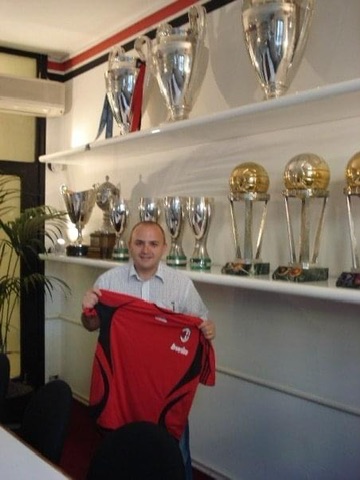
Little did I know that a few years later I would find myself walking the halls of Via Turati in person, thanks to the person who ignited my passion, the late artist and my teacher Charles Cassar. While he may have failed to make me an artist, he planted a deeply rooted seed called Milan. Through a mixture of fate and determination, I gained the chance to work on a project within the club’s organisational orbit around 2008. I remember stepping into a meeting room decorated with team photographs and European Cups, feeling like Charlie entering the chocolate factory. The same Galliani I had once pretended to be as a child strode past in the corridor, now part of my professional world.

In that moment I observed something profound: the human touch behind the glory. In meetings, Galliani was not merely a calculating executive; he listened attentively to staff, cracked self-deprecating jokes in dialect to put everyone at ease, and never finished a meeting without sincerely thanking those present for their work. I saw how loyalty and work ethic were cultivated through simple gestures of respect. Everyone at Via Turati—from executives to receptionists—carried themselves with pride that said, “I am part of AC Milan, and AC Milan cares for me.” Such emotional investment cannot be commanded; it must be earned through leadership. It is a lesson I carry with me: take care of your people, and they will move mountains.

If Via Turati shaped my strategic mind, Milanello formed my understanding of culture and learning. I spent several days at the training centre, ostensibly to observe how the club managed team-building and player performance. What I gained was much more. Every morning I arrived as the sun rose through the trees and stayed quietly on the sidelines during training, notebook in hand. Thanks to Cassar’s fraternal relationship with Silvano Ramaccioni, I had the privilege of living inside Milanello, sitting in the cafeteria and observing Ariedo Braida, Leonardo, Clarence Seedorf, Carlo Ancelotti, David Beckham, Ronaldinho, Kaká, Dida, Pippo Inzaghi, Gennaro Gattuso and Paolo Maldini.

I watched my childhood hero finish stretching and then walk over to a shy Primavera player, pat him on the back and offer a few words of advice. No camera caught it, but I saw it. I witnessed a culture of mentorship in action—veterans organically coaching youngsters, a living transfer of knowledge that no organisational chart can mandate. In the afternoons, players, coaches and staff ate together in the foresteria. I was an outsider at first, quietly eating my pasta a couple of tables away from the squad. By the third day, staff members I had befriended—including a young club press officer named Nicola, who shared my love of Maltese pastizzi—waved me over to join them. The conversation covered opponents, but also families, music and life. Milanello felt like a family dining room, only with everyone wearing sports gear and a few Ballon d’Or winners joking around.

Over those days I went from feeling like a stranger to being treated as part of the group. When Maldini heard I was from Malta, he smiled and said, “Malta? Malta, Malta!” Malta was where Milan held an important mid-season ritiro that helped realign purpose, vision and strategy after Calciopoli on the road to the 2007 Champions League victory. A few years later, through the relationships I had formed, I found myself hosting Christian Maldini in Malta for a short footballing spell abroad, following a recommendation by Nicola Pozzi. The circle closed: I was helping the son of my idol settle, just as Milan’s people had helped me settle during those days at Milanello.

This personal story means more to me than sentimentality. It highlights what Milan taught me about trust, relationship-building and working together for growth. They took a risk by welcoming a young foreign researcher into their inner circle; I, in turn, proved myself useful and trustworthy in small ways—whether by sharing an outsider’s viewpoint or simply by respecting confidences I was given. That mutual trust opened doors. It is the same approach I adopt in any organisation: enter with humility, observe and learn the culture, contribute where possible and, above all, build trust. Once people trust you, you stop being an outsider and become part of the team moving forward together.

San Siro is where everything came together—the vision and hard work blossomed into world-conquering performances, and the family culture expanded to 80,000 supporters in the stands and millions more around the world, including that little boy in Malta. San Siro taught me about the global stage and public narrative. I attended the 2007 Champions League semi-final against Manchester United and will never forget the choreography before the match: the entire stadium held up red-and-black cards that formed a giant “WE BELIEVE” mosaic across the Curva. Milan went on to a famous victory that night.

On the flight home, I reflected that the win was not only eleven men and a ball. It was thousands of people unified by belief, carefully cultivated by the club’s leadership and communication. The energy at San Siro tangibly lifted the players. This was a powerful revelation: the narrative an organisation shares with its community can influence performance. When people build a strong, positive story together, they create momentum that can overcome difficult moments. Storytelling, vision and symbolism are not decoration; they are fuel. Milan showed me how a global outlook can still be expressed with a local, human heart.

Today, when I lead change or help people work through uncertainty, I often pause and think: how would my Milan mentors approach this? They would start with a bold vision. They would focus on people, building a cohesive team before worrying about the competition. They would insist on ethics and fairness. And they would maintain adaptability with consistency—changing tactics when needed without losing sight of identity. In practice, that means being agile in implementation while remaining coherent in purpose. Times change, but when people know who they are and are trusted to contribute, they can move through change without losing themselves.

If a little boy turning his bedroom into San Siro was step one, and a young man sitting at Milanello’s lunch table was step two, step three has been applying those lessons through my work. I often describe the perspective as made somewhere between Via Turati and Milanello, and carried into San Siro and the world. Via Turati taught me purpose and vision. Milanello taught me that teamwork, mentorship and continuous learning are the heartbeat of sustained success. San Siro taught me to engage the wider community and to understand that a shared story has to be lived publicly as well as privately.

At this point in my life I wear many hats—public person, consultant, entrepreneur, Commissioner for NGOs and volunteering, mentor—but in each I see the imprint of Milan’s golden era. I see it when a formal meeting becomes a more human conversation, when a hopeful message helps people understand change, and when a young person asks for advice and deserves the time to be heard. Those gestures carry the culture forward.

One particularly emotional milestone came in June 2023, when Silvio Berlusconi passed away. I found myself unexpectedly moved. Not because I agreed with his politics, but because his footballing vision had shaped mine. I wrote a short reflection titled “Chi crede, vince”, thanking him for igniting my generation’s belief in what might be possible. A Maltese boy had dared to dream in step with a Milanese president, and that dream carried him to places and people he could never have imagined.

Now, as I write this epilogue, I feel immense gratitude. Milan’s transformation in those golden years gave me joyful memories, but it also gave me a way of understanding transformative leadership. It taught me that no dream is too big if the right team and culture grow around it. It ingrained in me that loyalty and humanity are long-term strengths. It proved that global vision and local heart can belong together. And it showed me that a club’s triumphs can inspire a life across the Mediterranean, and that the lessons can then travel onwards into other lives and other settings.

The adaptive leader I have become is a product of those experiences—made somewhere between Fgura, Via Turati and Milanello, and applied from San Siro to the rooms in which people make decisions together. I strive to be a bridge between vision and people, tradition and innovation, the local and the global. This epilogue is not merely the ending of a story; it is the beginning of another, where principles forged in the rise of a football club continue to live and evolve in new contexts.

As I close, I think back to a May night at San Siro in 2003, after a tense Champions League derby semi-final. The stadium was still full an hour after the match. Milan had qualified for the final and the players were taking a lap of honour. My father, who had flown up with me, nudged me and said, “Look at that joy—remember this when you wonder why you work so hard.” In that moment, the Via Turati visionaries, the Milanello family and the San Siro believers were one. That was Milan’s gift to me: the understanding that when purpose, people and passion align, something can be created that wins not only trophies but hearts. In the grand mosaic of life, this is the adventure of intertwining my life with a dream called Milan. Caro vecchio Milan, grazie—your lessons live on in me.
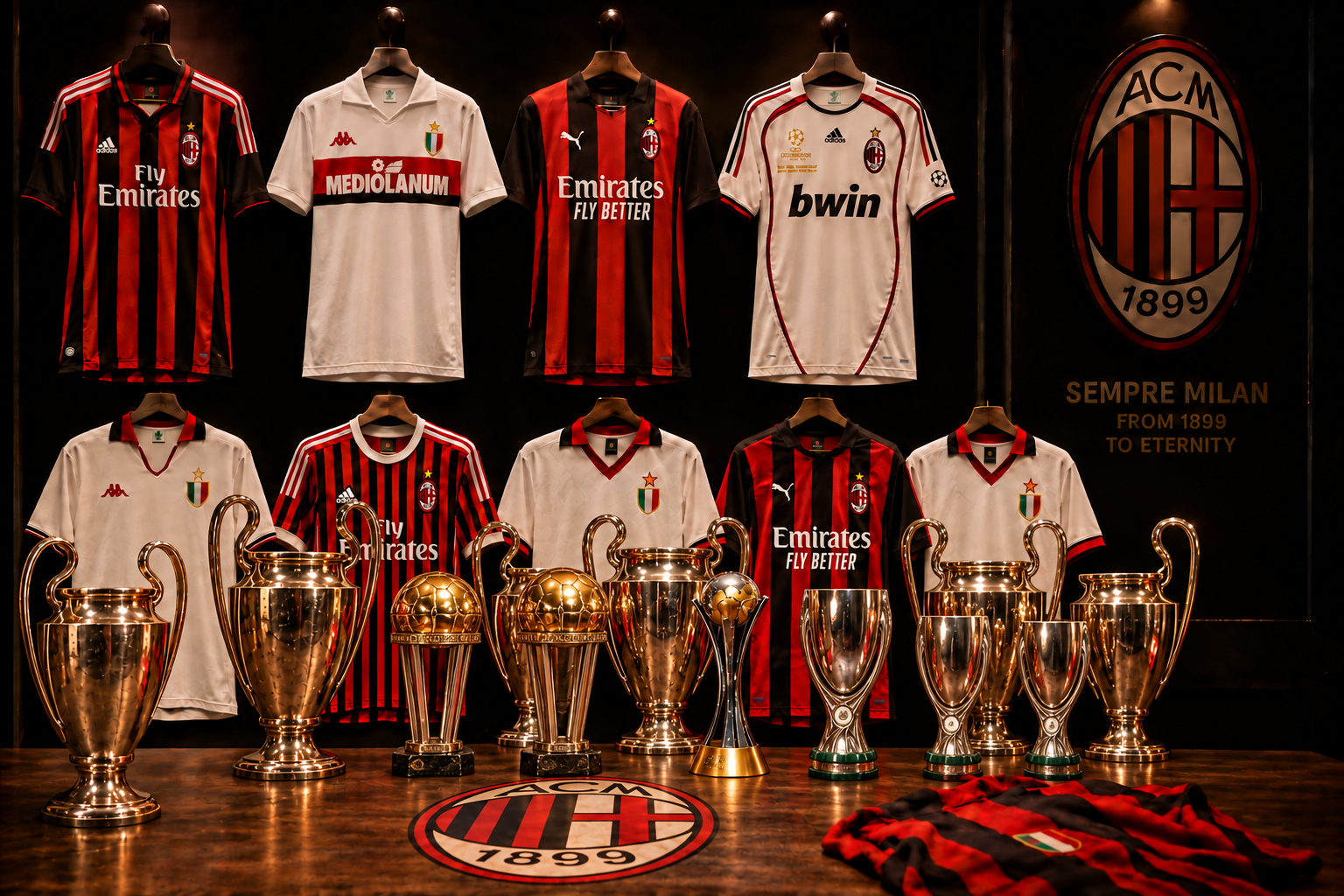
A museum-like display of historic red-and-black and white Milan shirts, European trophies and the club crest.

Memory in objects

Worn. Won. Remembered.

Shirts, crests and trophies hold different chapters of the same inheritance. This visual returns to the journal—not as decoration, but as a reminder that every era leaves something to the next.

Moments that shaped Milan

The story

Adaptive leadership

From Milan to the Boardroom

The complete reading edition follows the journey from its origins and the leaders of Milan’s defining era to organisational application, co-intelligence and the concluding personal reflection.

Long-form reading edition currently available in English.

Reading edition

Adaptive Leadership

A growing team history

It begins with the official palmarès and grows to embrace the sporting, tactical, cultural, player and off-pitch history of Milan. Each milestone keeps its original sources close at hand.

Move through the story from 1899 onwards

01 of 55